There and Back Again
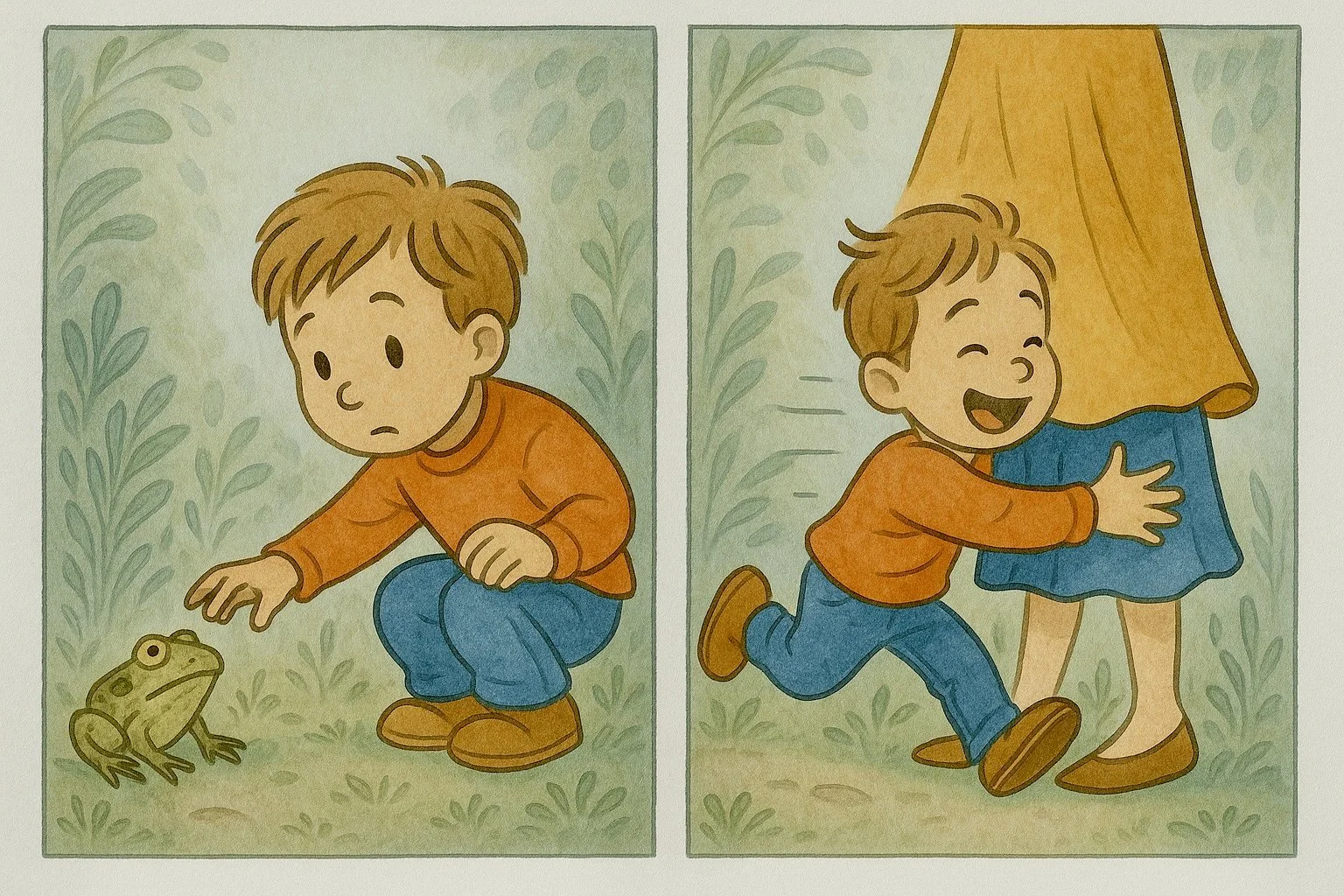
When my nephew began walking, he’d explore his surroundings, then he’d run back to his mom. Then he’d explore a bit more. Then he'd run back. Adventure. Home. Adventure. Home.
This balance, this push-pull, doesn’t end after childhood. It’s the rhythm of every human being, dating back to when we were rodents. It’s why, after a hike, you curl up somewhere warm, or why, after a first date, you talk to your best friend. Adventure. Home. Adventure. Home.
The same rhythm governs storytelling. Look at the Hero’s Journey described by Joseph Campbell: the hero leaves home; overcomes obstacles; then returns home, changed. This, according to Campbell, is the pattern of every mythology.
Bilbo Baggins goes “there and back again” in The Hobbit,* torn between the stay-at-home Baggins side of his personality and the adventure-seeking Took side. That’s the picture of every human heart.
The same rhythm shows up in stories that might surprise you. Elizabeth Bennett goes on two transformative adventures. First, to visit Charlotte. Second, to travel with her aunt and uncle. Each time, she leaves home, makes discoveries, then returns home with a new understanding of Mr. Darcy (and of herself).
The adventure is where you make discoveries. Home is where you process them.
And home matters just as much as the adventure. Think about Bag End. Think about Longbourn. If you’ve read these books, you feel something, don’t you? Nostalgia. Warmth. For Tolkien and Austen, a sense of home was no less fun or rich or worthy of attention than a sense of adventure.
But many storytellers (and I’m pointing at myself) neglect a sense of home. Home is boring. Who needs home? The audience, we think, wants wall-to-wall adventure. And the result is a story that feels difficult and noisy.
J.K. Rowling deserves every bit of her acclaim and fortune for her masterful depiction of Hogwarts: a place that she fills with both a sense of home and a sense of adventure. It's such a rich setting: a place where Harry is cozy and surrounded by friends but also hunted and surrounded by enemies.
But in the last book, Harry, Ron, and Hermione don’t go to Hogwarts. They end up in tents, but at least they have each other, right? Nope, the characters bicker and fight, and there’s no sense of home in sight.
If Rowling were to defend herself, she might say, That was the point! The characters were in a war!
Yes, sure, but that’s precisely when real people lay aside their differences and band together. Lacking a home, they become each other’s home. Ask any war veteran.
Anyway, I hate that seventh book. It’s so bleak—and not even in a realistic way.
But hang on. This is J.K. Rowling we’re talking about: the queen of balancing home and adventure. If she can make a blunder like this, what hope is there for the rest of us?
Constant vigilance, I suppose.
* The rhythm I’m describing plays out across the broad arc of The Hobbit as well as across each episode. After each obstacle, Bilbo finds a place of respite: Rivendell after the trolls, Beorn’s house after the goblins, Lake Town after Mirkwood.